Where Ethics and Photography Meet: A Closer Look at Kevin Carter
Katya Mulvaney
Wed Aug 16 2023 - Updated on Mon Nov 24 2025
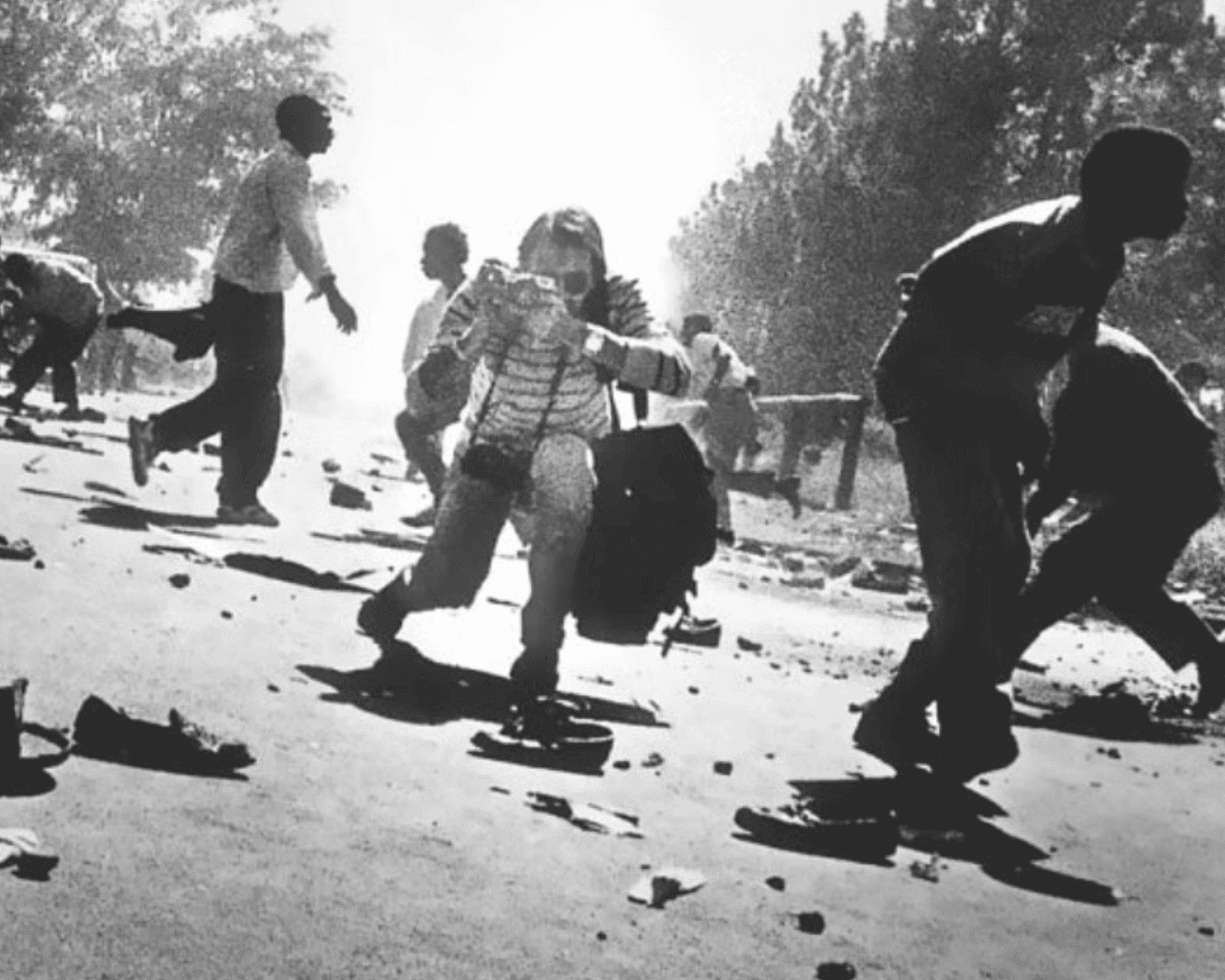
Photo by Ken Oosterbroek. Courtesy of Monica Zwolsman
Ethics in photography is a growing concern, especially when we talk about the ethics of photojournalism. As we move towards a world where almost anyone can capture a crucial moment on their phone, the lines between documentation, responsibility, and personal judgment can blur quickly. As a profession, photography - and photojournalism in particular - is often glamourised, but like most things in life, it has a darker side. Most photojournalists and war photographers will know exactly what I’m talking about.
Perhaps one of the most renowned photojournalists whose tragic story highlights ethical questions in photography is the late South African photojournalist, Kevin Carter.
When art and ethics meet, things can get a bit blurry. It’s challenging for most of us to separate the creation (the photograph) from the creator (the photographer), and the story of Carter’s suicide following his Pulitzer Prize for his photograph, The Vulture and the Little Girl, highlights this.
Kevin Carter: The Story Behind the Photographer
Kevin Carter was born in Johannesburg, South Africa, in the early 1960s. He grew up in a white, middle-class suburb where he frequently saw black South Africans getting arrested for being in white areas illegally - a law enforced under Apartheid. His parents reported that growing up, Carter often felt awkward and spoke out against the harsh segregation laws and the complicity of many white South Africans at the time.
After high school, Carter studied pharmaceuticals but dropped out to join the South African Defence Force. After four years of service, he was beaten up by fellow white servicemen for standing up for a black mess-hall waiter who was being abused. After that, he left the Force, moved to Durban, changed his name, and began a short career as a DJ before finding his calling as a photojournalist.
Reporting Under Apartheid: The Reality Carter Captured
Carter began his photography career as a sport photographer but was soon drawn to the idea of exposing the injustices of Apartheid. His work not only included interracial discrimination but also inter-tribal and political clashes that were rife at the time.
Having reported on township stabbings, shootings, and other violence, Carter’s work soon became renowned for representing the harsh, and largely unseen, South African climate of the 1980s and early 1990s.
 A member of South Africa’s neo-Nazi Afrikaner Resistance Movement (AWB) begs for his life, Bophuthatswana, March 1994. Photo by Kevin Carter
He was the first photographer to capture a public execution by necklacing (the gruesome act of placing a tyre around a victim’s neck, filling it with oil and setting it on fire). The victim was Maki Skosana, who was accused of being in a relationship with a white police officer. Interracial relationships were not only illegal during Apartheid, but they were severely punished within communities as well.
As a result of his work which captured such brutality, Carter and a group of other photojournalists soon earned the name “The Bang-Bang Club”, a group known for documenting conflict photography in some of the most dangerous parts of South Africa. The name emerged from their commitment to getting up in the early hours and heading to the townships around Johannesburg to report on the political violence in these areas.
View Kevin Carter’s profile on Getty Images for more.
The Vulture and the Little Girl: What Really Happened
After about thirteen years of work in South Africa, Carter took an assignment in Sudan to report on the famine that was raging in the country. Following days of visiting famine-stricken villages, Carter came across an emotional scene in a field close to a feeding station. He heard whimpering and saw a young child crawling across the barren land toward the station. A vulture soon landed near the child. Sensing this could possibly be a strong image, Carter spent several minutes shooting the scene before apparently standing up and chasing the vulture away.
 Photo by Kevin Carter, sourced from Wikipedia
This photograph was published in The New York Times in March 1993 as part of a campaign to increase awareness and aid in Sudan. The publication was followed by a wave of uproar from readers who wrote to ask about what happened to the child. Carter received a lot of scrutiny about his ethics as he didn’t assist the child in reaching the feeding station.
It was later revealed that the “little girl” was actually a boy named Kong Nyong, who made it to the feeding station but sadly died fourteen years later due to fever-related illness.
Unpacking the Backlash from The Vulture and the Little Girl
In hindsight, it seems as though the disgust and anger felt by the viewers may have shifted from the photograph to the photographer. Carter was demonised for fulfilling his role as a professional photojournalist - part of which is to observe and document, not interfere.
Perhaps it’s part of the human condition. We feel uncomfortable witnessing tragedy, but without dedicated journalists who put themselves and their mental wellbeing on the line, we would not have truthful representation of many historical events.
Following the release of his photograph in The New York Times, there was a notable increase in support for famine-stricken South Sudan. The campaign had achieved its goal, which demonstrates how powerful one image can be. This image has left an undeniable mark on our global society, and it’s no wonder why it forms part of our list of ten photographs that have changed the world.
Carter’s Death After Winning the Pulitzer Prize
At age 33, three months after winning the esteemed Pulitzer Prize for The Vulture and the Little Girl, Carter took his own life in Johannesburg. There was a lot of speculation surrounding his death and whether the fame had been a catalyst for his actions. Many were shocked that someone who had just received such an auspicious prize would take their own life.
In truth, none of us will ever truly know the reasons for his death. However, imagining the scale of the atrocities Carter had witnessed throughout his career, it becomes easier to understand how deeply his mental health may have been affected. This, coupled with his reported drug usage and the death of his close friend and fellow Bang-Bang Club member, Ken Osterbrock, likely had an enormous emotional impact.
 Photo by Alex Dolle
A Closer Look at Ethics in Photojournalism Today
In my research, I came across several pieces discussing the fine line between ethics and the work of photojournalists. Some even questioned whether mass-media photography contributes to a decline in empathy in viewers. However, I’d like to propose a different perspective.
Although there may be times where photojournalists could potentially step in and assist, the very nature of their work is to observe. Without this crucial and brave documentation, we would be left in the dark about many significant events. Conflict, famine, discrimination - these realities would remain unseen.
Carter’s commitment and the contribution he made to his field is commendable. Given the chance (if he wasn’t on assignment), he may very well have helped that child. We will never know. What is certain is that his work left a lasting legacy, not only on the world of photography, but on global awareness as a whole.
Final Thoughts
Most of us don’t want to face the harsh realities that exist in the world, myself included. But there are those who make it their life’s purpose to capture and present the world to those of us who wouldn’t dream of putting ourselves in these situations. We must be conscious of the lens through which we judge those who reveal the truth of the world. Without them, we would be a less compassionate and knowledgeable society - even if that knowledge makes us uncomfortable at times.
Ethics in photography will never be simple, but discussing them openly helps us understand the responsibility and humanity behind the images we rely on.
Written by Katya Mulvaney | Katya is a brand creation and digital marketing specialist. She heads up marketing and communication here at LightRocket. If you subscribe to our emailer or follow us on social media, then you're probably already familiar with some of her work. She also never shies away from a good plate of pasta.
To read more helpful articles on photography, check out our blog page.
Join our growing photographer community at LightRocket and get powerful archive management and website building tools for free!