Landscape Photography Tips: 5 Lessons from 20+ Years
Alexander Vershinin
Mon Oct 26 2026
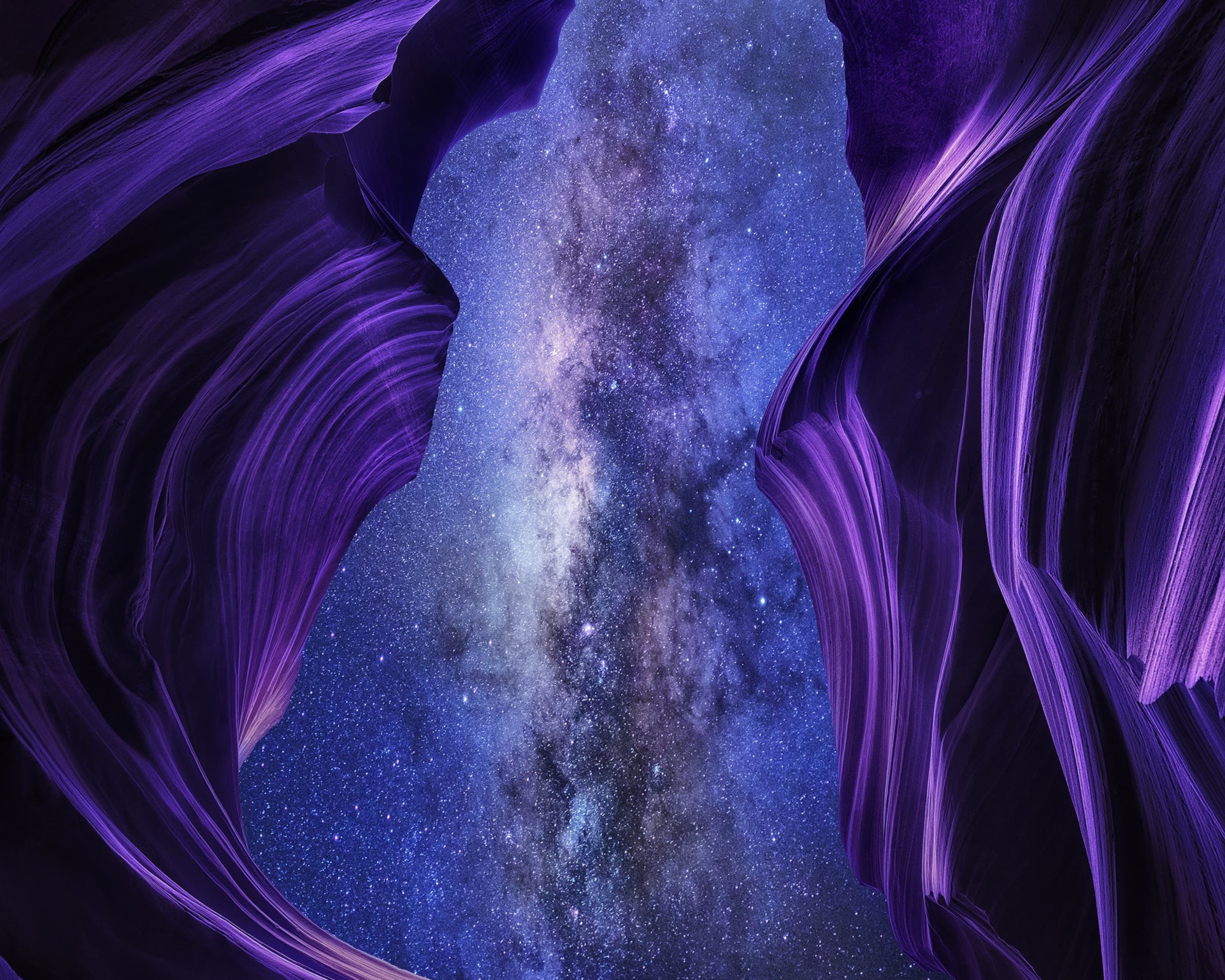
The Velvet Abyss - Antelope Canyon, Arizona, USA. Photo by Alexander Vershinin
My first camera was a Soviet FED rangefinder, and I was about twelve years old. It had no autofocus and no automatic exposure. Every setting was a decision I had to make myself, and every frame cost real money for film and developing. I did not know it then, but that camera taught me the habit that still defines my work: decide before you press the shutter.
More than twenty years later I photograph landscapes for a living from Las Vegas, Nevada. I shoot with a Phase One IQ180 digital back, and I make large limited-edition prints for collectors, offices and interior designers. Between the FED and today lies a long road through film, panoramic cameras and a lot of early mornings. Here’s what that road taught me.
1. Fewer frames make better photographs
In 2006 I became a professional photographer with a Linhof Technorama 617S, a panoramic film camera that exposes a frame of 6x17 centimetres. A roll of 120 film gives you only a handful of those frames. You cannot "spray and pray" with a camera like that. You stand in front of a scene, you wait, you think, and you press the shutter only when everything is ready.
When I moved to digital medium format, I kept that discipline. Memory cards are cheap, but my attention is not. I still arrive at a location with a plan, and I still treat every exposure as if it costs something. Most of my best photographs come from the one frame I waited for, not from the two hundred I could have taken.
2. A wide frame is a different way of seeing
The 6x17 format is about three times wider than it is tall. It is not a regular photograph cropped narrower. It asks for a different kind of composition. Everything inside the frame has to earn its place, because there is so much space for weak elements to hide.
Over time I learned to look for scenes that read from left to right: a coastline that unfolds, a salt flat that disappears into the horizon, a canyon wall that curves out of the frame. My photograph "Infinity", taken at the Bonneville Salt Flats in Utah, is a good example. Nothing in the frame is complicated. The picture works because the panoramic format gives the empty space room to breathe, and the viewer feels the scale.
 Infinity - Bonneville Lake, Utah, USA. Photo by Alexander Vershinin
3. Light decides, and light does not wait
I have photographed in Iceland, Norway, Namibia, Egypt, Australia and across the American Southwest. The places are very different. The rule is the same everywhere: the light decides whether the photograph works, and it never waits for you.
That means being at the location before the good light arrives, and often staying after everyone else has left. It means checking weather forecasts more often than I check email. It also means accepting that many trips return nothing. The photographs people see are the result of many days of waiting that nobody sees.
4. Equipment matters less than the decision behind it
I have moved from the FED to Linhof film cameras to a Phase One IQ180 with Mamiya and Phase One lenses, a Gitzo tripod and Hitech filters. Better equipment gives me more resolution and more tonal range, and I am grateful for both, especially when I print large. But I have never made a better photograph because of a camera alone.
What improved my work was learning what to leave out, when to wait and when to walk away from a scene that was not ready. The FED taught me that at age twelve. Every camera since has only given me more detail to apply it to.
 Black Sands Opera - Stokksnes, Iceland. Photo by Alexander Vershinin
5. Make the photograph for the print
Between 2013 and 2022 my work received more than 140 awards at the Epson International Pano Awards, including Gold for "Black Sands Opera" in 2016 and "Rise A Night" in 2018. Those awards matter to me, but what matters more is how the pictures look when they are printed large.
A photograph on a screen is a small, temporary object. A print on a wall, especially a large panoramic on acrylic, is something you live with. I now compose with that in mind. I ask whether the picture will still hold attention after a year of hanging in a room, not whether it will get attention in the first five seconds of a social media feed.
What I would tell my younger self
If I could talk to the twelve-year-old with the FED, I would not tell him to buy a better camera. I would tell him that the habits he is building right now are the whole craft: slowing down, thinking before he shoots and being willing to wait. Everything else is equipment.
For anyone starting out with landscape photography, my advice is simple. Shoot slowly. Learn one format deeply before you try them all. Go back to the same places in different light. And print your work, because a print will tell you the truth about a photograph in a way a screen never will.
Written by Alexander Vershinin. Alexander is a fine art landscape photographer based in Las Vegas, Nevada. He picked up his first camera, a Soviet FED, as a child, and has worked professionally since 2006, first with a Linhof Technorama 617S panoramic film camera and now with a Phase One medium format digital system. His panoramic work from Iceland, Norway, Namibia, Egypt, Australia and the American Southwest has received more than 140 awards at The Epson International Pano Awards between 2013 and 2022. He makes signed, limited edition prints on acrylic and other premium media for collectors, offices and interior designers.
To read more helpful articles on photography, check out our blog page.
Join our growing photographer community at LightRocket and get powerful archive management and website building tools for free!